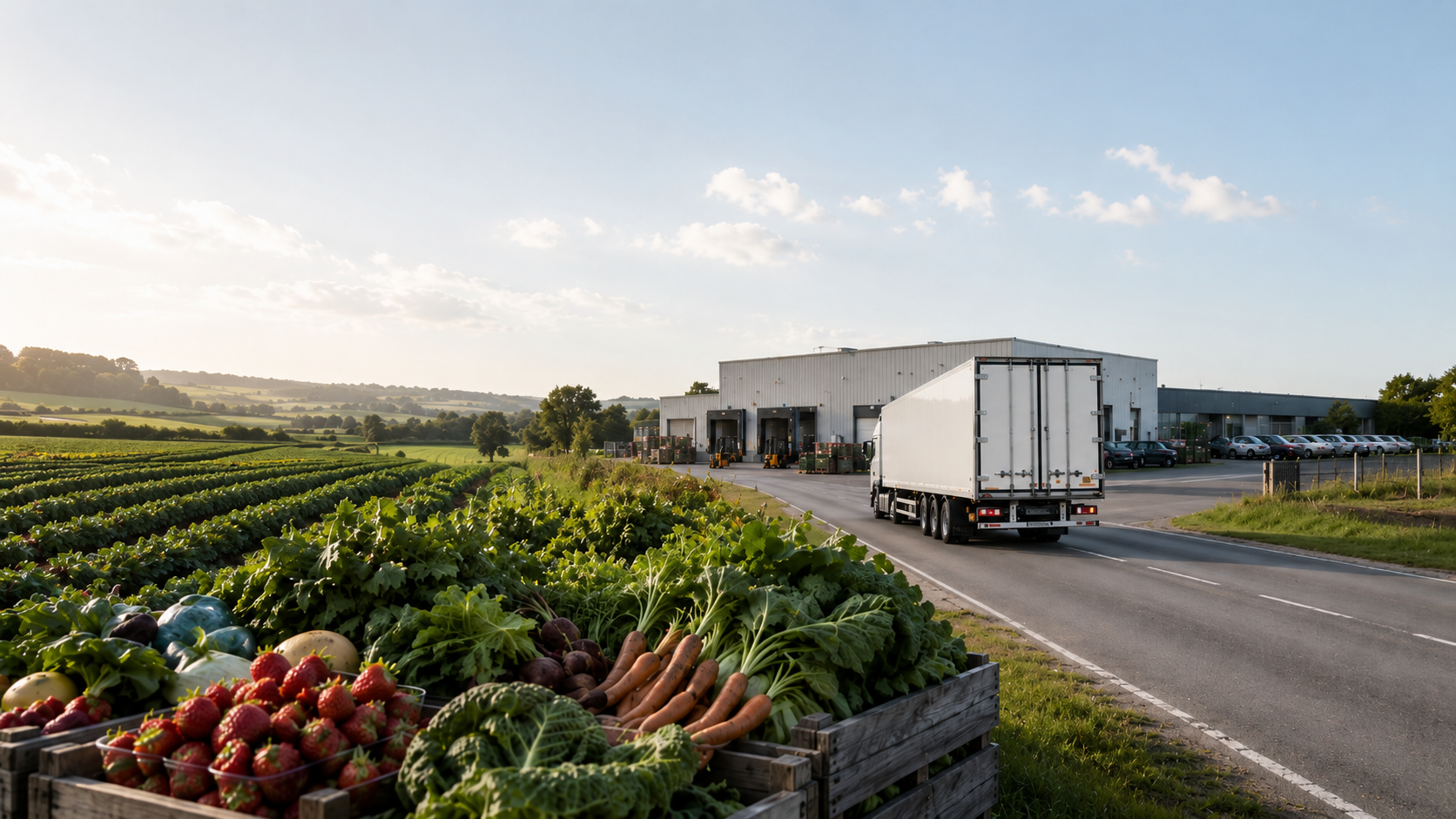
The UK's food and drink industry is the country's largest manufacturing sector by turnover, valued at £104.4 billion - more than the automotive and aerospace industries combined.
It is an industry under huge economic pressure, however, as confidence among foodservice businesses plummets to -60% (Food and Drink Federation). If a crisis were to occur in this sector, the entire UK economy would feel the effects. Frustratingly, many of the challenges facing the foodservice industry - such as regulation, inflation, labour shortages, and a turbulent economic environment - fall outside of the control of the organisations within it.
Recognising the risks, in July 2025 the UK government unveiled its "Good Food Cycle" strategy. As part of this framework, the government aims to establish conditions for the food sector to thrive and grow sustainably, including (among other things) promoting investment in innovation and productivity, and ensuring supply chains are fairer and more transparent. These are things that organisations can control.
The invisible backbone of the foodservice sector
A common, critical function that exists throughout the entire foodservice supply chain, from field to freight to fork, is the movement of money.
Business moves at the speed of payments, so if money flows across supply chains seamlessly, everyone benefits: suppliers gain stability and confidence; distributors operate more efficiently; and buyers save time and resource. Everyone achieves improved working capital, healthier partnerships and fairer collaborations.
However, the reality in today's foodservice sector tells a very different story.
A sector unique in its payment challenges
The perishable nature of foodservice products means that buyers must make orders far more frequently than other sectors, often from a panoply of different suppliers. Many of the buyers, such as councils, schools or hospitals, lack the extensive storage infrastructure of supermarkets, exacerbating the perishability of stock. This means a huge volume of low-value, time-critical transactions flow every day. What's more, tracking, reconciling and approving these transactions is far from simple.
Instead of selling produce per unit, as happens in most sectors, foodservice suppliers typically sell by weight, to properly reflect the value of a product. As a result, the total cost of an order is often not truly known until delivery, when the buyer checks the weight and quality of the products. Consequently, final invoice values may differ from the original purchase order, adding complexity to invoice matching, approvals and reconciliation.
At the same time, operating margins remain under intense pressure. Production costs rose five percent in the 12 months preceding Q3 2025, keeping wholesale prices elevated. While the rate of inflation has recently decelerated, it is expected to remain high through 2026.
As a result, the majority of companies in the food and drink industry cite limited cash flow as their main challenge. Limited cashflow typically leads to poor payment practices, which is why the Food & Beverage industry consistently ranks among the top three worst payers of all UK industries. This is serious: late payments can lead to business closures.
It's ironic that an industry that can transport a pallet of fresh strawberries picked in Kent to a supermarket shelf in Singapore in under a week struggles to make a payment in under 30 days.
What businesses are doing to unlock growth
To combat the unique payment challenges the sector faces, in line with the Good Food Cycle, many organisations are turning to technology and innovation. For some, this is in the form of digital business payment technologies, using a combination of Level 3 Tokenised Purchasing Cards and Straight-Through Processing (STP) to achieve greater control over cashflow, without the complexities of 'traditional', manual-heavy processes.
Let's break down the benefits of this strategy through the lens of a key stakeholder in the UK's foodservice supply chain: local authorities. Local authorities are responsible for overseeing school meal services for all state-funded schools in their area. Most local authorities are managing hundreds of schools and thousands of students simultaneously, creating an extensive and highly complex supply chain.
Students having access to a high-quality, healthy and fresh meal is a non-negotiable, regardless of the financial challenges currently facing authorities. In the Haringey area of London for example, almost half of the state schools are in debt, resulting in severe cash flow pressures, but this cannot result in no school lunches. Many local authorities are using commercial cards, including Pcards, to access working capital via an extended line of credit, helping to ensure healthy cash flow year-round.
Some local authorities are also issuing separate cards to each school they oversee, establishing defined purchasing controls for each, depending on the number of students and staff each school feeds. A council can also create a 'supplier whitelist', ensuring schools are only buying from suppliers that are trusted to deliver high-quality, reasonably priced produce consistently, reducing fraud risks and reconciliation complexities. This level of financial control makes it much easier to keep track of payments throughout the supply chain, which in turn enables more precise cashflow forecasting.
Automation, data and stronger payment security
Even just a few years ago, local authorities may have struggled to manage all these cards. It's why many are also using STP automation for commercial cards, enabling schools to complete an order and the supplier will receive payment within days, without needing to manually process the invoice.
This is aided and abetted through better use of available data. A significant benefit of commercial cards is their ability to provide enhanced transaction information, commonly known as Level 3 data, into connected ERP or Accounts Payable systems. This can include line-item descriptions, product classifications, quantities, unit pricing and tax information. Not only do schools and councils save time and resources by spending less time manually initiating, processing and reconciling payments, they also do so by streamlining VAT reclaim.
Data also shows that schools and local authorities have become highly attractive targets for fraudsters given the complexity of the supply chains they're involved in, combined with the level of sensitive data held by both. Unlike traditional business payment methods, commercial cards can be securely tokenised, where sensitive payment card details are replaced with randomised, non-sensitive digital 'tokens'. This means that even if the school or council falls victim to a cyber breach, sensitive payment details cannot be seen or exploited. This also has the added benefit of reducing PCI scope, simplifying compliance.
Food for thought
For decades, the foodservice sector has successfully moved fresh produce, ingredients and prepared food across the world. It does so at remarkable speed, navigating complex and fragile supply chains across jurisdictions, all while ensuring transportation environments are tailored for its specific cargo.
And yet, for all this logistical brilliance, money still moves slowly. Organisations that are quick to act on the spirit of the Good Food Cycle, embracing innovation and technology, will not only strengthen their own resilience, but help secure the future of one of the UK economy's most critical industries.
Pat Bermingham is Chief Executive Officer at Adflex. He has nearly 25 years' experience in the payments industry, overseeing the growth and development of Adflex as a premier B2B payments service provider.